


How Do You Keep Performance Golf Fabric Working?
Oct 25, 2026
Last Updated: October 25, 2026
Quick Summary
Keep performance golf fabric working by washing it in cold water with a small amount of mild detergent, skipping fabric softener and bleach, and air drying it flat or on a hanger. Heat breaks down spandex and softener clogs wicking fibers, so treat stains before the wash and check them before any dryer heat.
- Turn polos inside out and wash them separately from jeans, towels, and anything with zippers or velcro.
- Use less mild detergent than the bottle suggests, since residue blocks airflow and wicking.
- Pre-treat sunscreen stains with mild liquid detergent and let it sit 10 to 15 minutes before a cold wash.
- For sweat, pre-soak in roughly one part white vinegar to four parts cool water before washing.
- Air dry flat or hung out of direct sunlight; if machine drying, use the lowest heat and pull the shirt out slightly damp.
Table of Contents
- Why Performance Golf Fabric Needs Different Care
- How to Wash Moisture-Wicking Golf Shirts Step by Step
- Why Fabric Softener on Performance Clothing Does More Harm Than Good
- How to Remove Sweat Stains From Golf Shirts and Other Course Marks
- How to Dry Polyester Golf Shirts Without Killing the Stretch
- Stopping Odor and Detergent Buildup Before It Sets In
- Reading the Care Label: Polyester-Spandex Blends vs Cotton and Merino
- Build a Care Routine Around Your Live Forever Golf Polos
- Frequently Asked Questions
Why Performance Golf Fabric Needs Different Care
Performance golf fabric is any synthetic or blended textile built to wick sweat, stretch with your swing, and dry fast, and it needs care cotton does not.
A moisture-wicking golf shirt is engineered at the fiber level: polyester and polyester-spandex blends pull sweat to the surface so it evaporates.
Most golfers treat a $98 polo like a gym towel. Performance fabric is closer to technical gear than a t-shirt.
What Sweat, Sunscreen and Detergent Do to Synthetic Fibers
Sweat leaves salts and oils that trap odor, sunscreen leaves an oily film that holds stains, and too much detergent leaves a residue that blocks airflow and wicking.
The damage is quiet, you won't see it after one wash. Over a few months:
- Sweat and body oils build up and lock in smell
- Sunscreen residue yellows collars and underarms
- Excess detergent stiffens the fabric and cuts breathability
A common mistake is washing performance gear like cotton. Cotton tolerates hot water and softener; synthetic performance fabric does not.
How to Wash Moisture-Wicking Golf Shirts Step by Step
Learning how to wash moisture-wicking golf shirts comes down to four rules: cold water, mild detergent, a small load, and air drying.
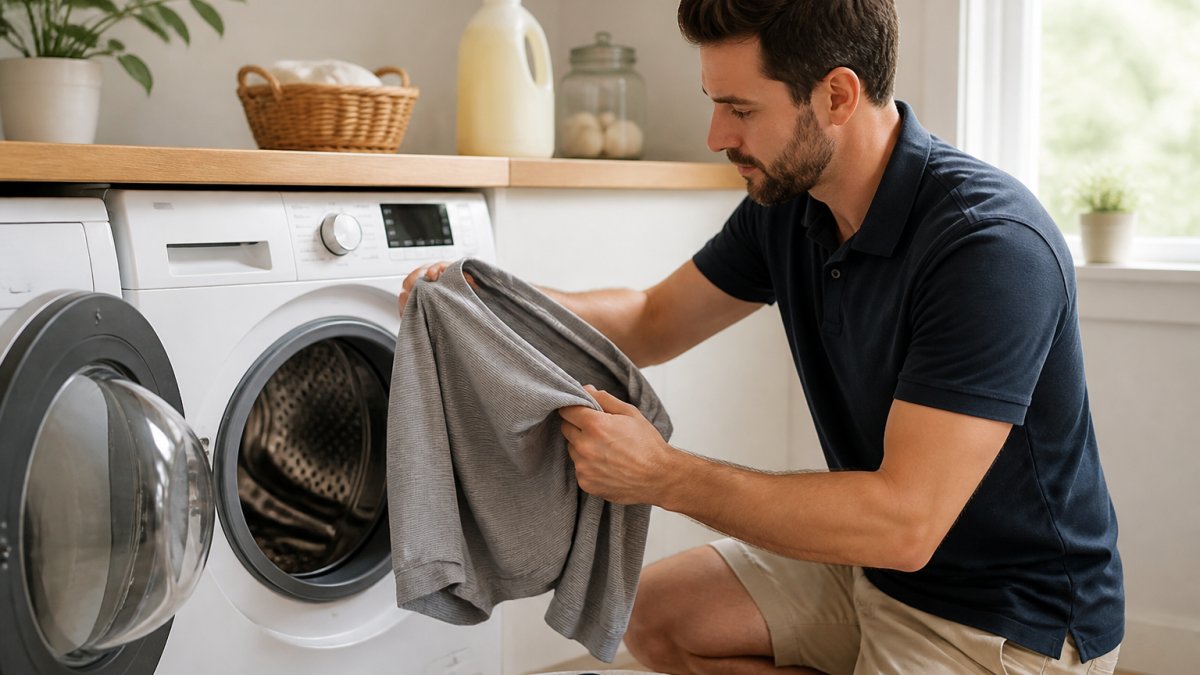
Here is the routine we recommend:
- Turn the shirt inside out. This protects the outer face and lets water reach the fibers that touch your skin.
- Wash separately from rough items. Keep polos away from jeans, towels, and anything with zippers or velcro.
- Use cold water. Heat is the enemy of spandex and stretch.
- Add a small amount of mild detergent. Use less than the bottle suggests, not more.
- Choose a gentle or normal cycle. Skip heavy-duty settings.
- Skip fabric softener and bleach entirely. More on softener below.
Cold Water, Mild Detergent and the Right Load Size
Cold water protects the fibers, and mild detergent cleans without residue. Wash in small loads so polos have room to move, a stuffed machine rubs fabric against zippers, which pills and abrades the surface.
Detergent choice is where most people go wrong. Standard powders and heavy liquids leave a film; a mild, free-and-clear liquid rinses clean. For deeper odor, an occasional sport detergent helps.
Why Fabric Softener on Performance Clothing Does More Harm Than Good
Fabric softener on performance clothing coats fibers in a waxy film that blocks moisture wicking and traps odor, soft for one wear, quietly ruining the performance you paid for.
On cotton, a lubricating layer is fine; on a moisture-wicking golf shirt, it seals the surface, so sweat can't pass through, airflow drops, and odor gets trapped.
The same logic applies to bleach and harsh stain removers, which weaken synthetic fibers over time. Gentle beats aggressive every time.
How to Remove Sweat Stains From Golf Shirts and Other Course Marks
To remove sweat stains from golf shirts, pre-treat with mild detergent or diluted white vinegar, let it sit, then wash cold. Never rub hard or reach for hot water.
Golf throws specific stains at you: sweat and deodorant ring the underarms and collar, sunscreen smears the neck and forearms, and grass hits the knees and cuffs. The rule is the same for all: lift the stain before the wash, use cold water, and never scrub technical fabric.
Why Golf Stains Are Different From Laundry Stains
Most stains on a performance polo are a mix of oil, salt, and product. Sweat carries salts and body oils, deodorant adds waxes and aluminum, sunscreen is an oily film, and grass brings chlorophyll and plant proteins.
That is why the first rule is cold. Hot water coagulates protein stains and bakes oils into synthetics, and once heat-set, no gentle detergent fully lifts them.
Sunscreen, Grass and Deodorant Stains: A Stain-by-Stain Method
Match the treatment to the stain and give each time to work before washing.
- Sunscreen: Blot off any excess with a clean cloth, then apply a small amount of mild liquid detergent directly to the stain and let it sit 10 to 15 minutes. Sunscreen is an oily film, so it needs the detergent to break the oil before the wash. Wash cold.
- Grass: Pre-treat with a little detergent and let it sit a few minutes, then wash cold. For a stubborn green mark, a diluted white vinegar dab before the detergent helps loosen the chlorophyll. Avoid rubbing, which pushes the pigment deeper into the weave.
- Deodorant: The waxy buildup responds to a short soak in cool water with mild detergent, 15 to 30 minutes. If a white cast remains under the arm, a soft-bristle brush on the stain only, never the whole garment, lifts the residue without abrading the surface.
For any stain, work from the inside out so you push the stain off the fabric rather than through it. Blot, don't scrub, and use a soft-bristle brush on the stain only after detergent has loosened it.
When a Stain Won't Come Out
If a stain survives one gentle treatment, don't escalate to hot water or harsh remover. Re-treat with detergent, give it more dwell time, and wash cold again, most golf stains lift on the second attempt.
A faint ring after drying on sunscreen and deodorant stains is residue that wasn't fully rinsed. An extra cold rinse cycle, no detergent, often clears it.
How to Dry Polyester Golf Shirts Without Killing the Stretch
The safest way to dry polyester golf shirts is to air dry them flat or on a hanger, away from direct sun and heat.
Spandex and stretch fibers break down under heat. A hot dryer is the fastest way to turn a stretchy polo stiff, and it sets wrinkles and can shrink the garment.
Our drying rules:
- Air dry whenever you can
- Lay flat or hang to keep the shape
- Keep out of direct sunlight, which fades color
If the care label says tumble dry low, believe it, the maker knows heat is the risk.
Stopping Odor and Detergent Buildup Before It Sets In
Odor and detergent buildup share one root cause: residue trapped in the fibers.
Synthetic fibers hold oils that feed odor-causing bacteria, so a shirt that smells clean out of the wash can turn sour the moment you sweat.
To reset a smelly polo:
- Soak in cool water with a small amount of white vinegar
- Wash with mild detergent, no softener
- Air dry fully before storing
Also, never toss a sweaty polo straight into a hamper or a sealed bag. Let it air dry first.
Store clean polos folded or hung in a dry spot. Damp storage undoes a good wash.
Reading the Care Label: Polyester-Spandex Blends vs Cotton and Merino
The care label is the final word, and it varies by blend. Polyester-spandex wants cold water and low heat, cotton tolerates more heat but holds moisture, and merino needs gentle handling and no agitation. Read the symbols and fiber percentages together, then choose the gentler path when they disagree.
How to Read the Care Label Symbols
Most performance polos carry a short row of symbols plus a fiber content line. Read them in this order:
- Washtub symbol: A tub with a number is the maximum water temperature in Celsius. A tub with a hand means hand wash. A tub with an X means do not wash.
- Triangle: Bleach. An empty triangle allows any bleach, a triangle with diagonal lines allows only color-safe (oxygen) bleach, and a crossed-out triangle means no bleach.
- Square with a circle: Tumble dry. Dots indicate heat level, one dot for low heat and two for medium. A crossed-out symbol means do not tumble dry, so air dry.
When a label gives a range, choose the lower number. Tumble dry low is a ceiling, not a target, air drying is always safe for performance fabric.
Polyester-Spandex, Nylon, Cotton and Merino: What Each Blend Actually Needs
Fiber content tells you what the label symbols are protecting. Here is how the main fabric types compare:
| Fabric | Wicking | Stretch | Care Needs | Best For |
|---|---|---|---|---|
| Polyester-spandex | Strong | High | Cold wash, air dry, no softener | Golf, active wear |
| Nylon blends | Strong | Medium | Cold wash, low heat | Durability, outdoor use |
| Cotton | Low | Low | Warmer wash ok, but holds moisture | Casual, everyday |
| Merino wool | Medium | Low | Gentle wash, flat dry, no agitation | Cool climates, odor control |
| Linen | Low | Low | Gentle wash, air dry | Hot, dry weather |
Polyester and nylon lead on moisture management and durability. Cotton feels soft but soaks sweat and dries slowly. Merino resists odor naturally but needs careful washing. Linen breathes well but wrinkles and offers little stretch.
The percentage matters as much as the fiber name. An 88 percent polyester, 12 percent spandex polo should be treated as a stretch garment: cold water, low heat, no softener.
Blend-Specific Care Rules
- Polyester-spandex: Cold wash, mild detergent, no fabric softener, air dry or tumble dry low. The spandex is the fragile part, so treat heat as the enemy.
- Nylon blends: Cold wash and low heat. Nylon is durable but can yellow with bleach and soften with high heat.
- Cotton and cotton-poly: A warmer wash is tolerable, but cotton holds moisture and dries slowly. Skip softener on any poly content, since it coats the wicking fibers.
Always check the garment label for the exact blend. When in doubt, go colder and gentler, that choice is safe across every blend on this list.
For broader guidance on fabric care standards, the American Cleaning Institute's fabric care resources cover how different fibers respond to water temperature and detergent.
Build a Care Routine Around Your Live Forever Golf Polos
A simple routine keeps performance fabric working for years: wash cold, skip softener, air dry, and treat stains early.
Our Ringer polos use a Tour Performance Blend of polyester and spandex built for stretch and moisture wicking.
Here is a care checklist you can stick to:
- Turn polos inside out before washing
- Wash in cold water with mild detergent
- Skip fabric softener and dryer sheets
Want to see the polo this routine is built around? Take a look at The Gamer Polo and its drirelease blend.

For more on how temperature and detergent affect synthetic fabrics, the International Association for Soaps, Detergents and Maintenance Products publishes guidance on gentle laundering.
Frequently Asked Questions
How often should you wash a golf shirt after wearing it?
Wash it after every round. Sweat, sunscreen and body oils sit in the fibers and, left overnight in a bag or hamper, they turn into odor that a normal wash will not shift. If you only wore the shirt for a short practice session and did not sweat, airing it out and hanging it up is fine, but anything worn for 18 holes should go straight into the wash. Rotating three or four polos keeps you from over-washing a single favorite.
Can you use fabric softener on moisture-wicking golf clothes?
No. Fabric softener leaves a waxy coating on synthetic fibers that blocks the channels moving sweat away from your skin, so the shirt stops wicking and starts holding moisture. It also traps odor. Skip softener and dryer sheets entirely, and if a shirt already feels stiff or stops drying fast, run it through a warm wash with no detergent to strip the residue before wearing it again.
How do you remove sweat and sunscreen stains from golf apparel?
Treat the stain before washing. For sweat, make a paste of mild detergent and cold water, work it into the fabric and let it sit for 15 minutes. Sunscreen and deodorant respond better to a short soak in cold water with a small amount of detergent, then a gentle rub. Never use hot water on these stains, because heat sets the oils into polyester. Check the area before drying; if the mark remains, repeat the treatment rather than putting it in the dryer.
Can performance golf fabric go in the dryer?
Low heat is acceptable for most polyester and polyester-spandex blends, but air drying is safer. High heat damages spandex, which is what gives a performance polo its four-way stretch, and it can shrink or warp the fit over time. If you do tumble dry, use the lowest setting and pull the shirt out slightly damp, then hang it. Never dry a performance polo on a hot setting right after a round and expect the stretch to hold up for seasons.
Good care is the difference between a polo that performs for one season and one that lasts for many. Live Forever Golf builds gear designed to look as good as it plays, with performance stretch and durable construction. Get started with Live Forever Golf and keep your performance golf fabric working round after round.
